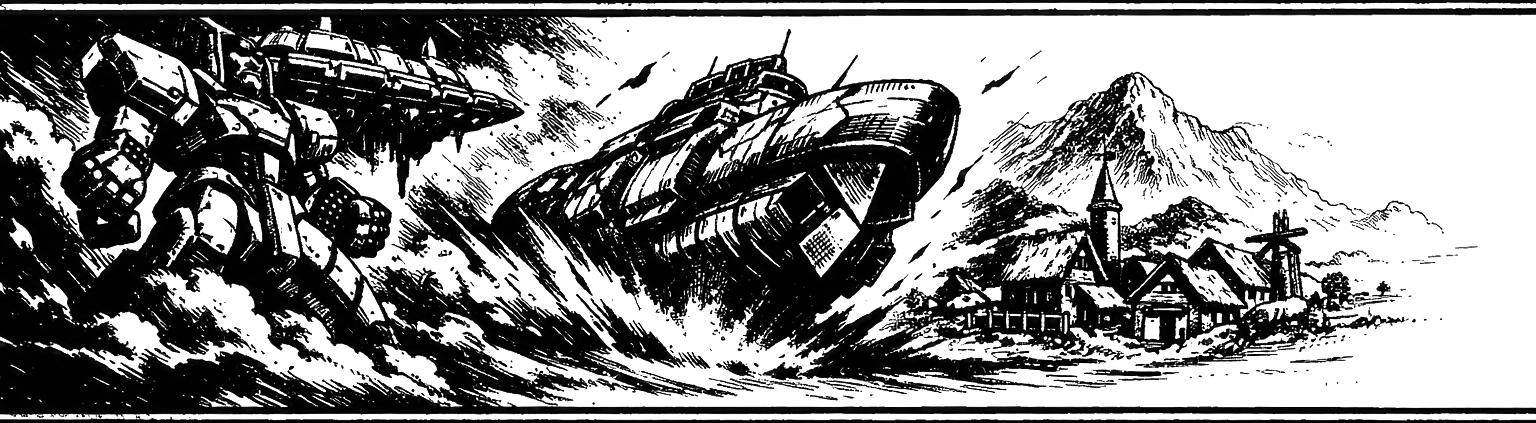
Square told Tetsuya Takahashi to cut Xenogears off at a convenient point. He was already over schedule, the game wasn't going to finish in time, and the instruction from above was to stop it wherever was handy and ship what he had. He refused. What he offered instead — Fei and Elly in a dark room, narrating the ending while it plays out on a screen behind them — is the second half of Xenogears as you played it, and for twenty-five years most people have had the story of how it happened exactly backwards.
The version you've probably absorbed is that the money ran out and the team got crushed, and Takahashi patched the finale together with whatever was left. Half of that is true. But the narrated second half wasn't done to him. It was his counter-offer — the thing he proposed so the ending would exist at all, when the alternative on the table was no ending. This is the full account: the limit he was working under, the order he was given, the trade he made to get out from under it, and why he still says it was the right call.
This post discusses the game's ending and the exact point in the story where Xenogears would have been abandoned. If you're partway through and want the plot to unfold clean, come back after the credits.
The Two-Year Rule
Square gave every project eighteen months. That was the standing rule when Xenogears went into production around 1996 — a company-wide development limit, and it applied to a science-fiction epic spanning ten thousand years of backstory exactly as it applied to anything else. Takahashi didn't accept eighteen months. He argued the game up to two years, and he describes it as having to plead for the extension rather than being handed it.
Two years was already double what Final Fantasy VII had taken, and it still wasn't enough. The team was about thirty people, staffed almost entirely with new and young developers, and Takahashi wasn't only directing a game — he was teaching a crew how to make one. Technology like 3D was brand new to them. Every skill the game needed, someone was learning on the clock, and the schedule slipped under the weight of it. His own summary is the plainest possible: finishing everything simply wasn't possible.
The ambition that overran the schedule was there from the first pitch. Xenogears began as a story Takahashi wrote with Kaori Tanaka for Final Fantasy VII. Square rejected it for that game — too dark and complicated for a fantasy — but Hironobu Sakaguchi told Takahashi to build it as a separate project instead. The team assigned to it had originally been formed to make a sequel to Chrono Trigger, and it was redirected onto the new game under the working title Project Noah. The whole thing was pointed at more than it could reach almost from the start: Takahashi wanted it in full 3D, and when the PlayStation couldn't manage that, the compromise became the look the game actually shipped with — flat character sprites moving against three-dimensional backgrounds.
The eighteen-month figure, and the point that two years was a concession Takahashi had to negotiate rather than a standard allowance, comes from his own account in Japanese and doesn't appear in the English-language record, which carries only a flat "all projects take two years." The distinction matters: the schedule wasn't generous and then squandered. It was already the shortest window the game could survive on, extended once, under protest.
That's the box. A too-large game, a too-short clock, a team learning the craft as it built, and an extension that bought time without ever buying enough of it. Everything that happened to the second half happened inside those walls.
The Order From Above
The instruction came down when the deadline broke. Once it was clear the game would not finish on the schedule Takahashi had already fought to extend, management told him to cut it off at a convenient point — to stop Xenogears wherever was handy and ship what existed. And Square had a specific place in mind. The proposal was to end the game after the party escapes Solaris.
That beat is the end of the first half as the game shipped. So the instruction wasn't "trim the finale" or "compress the last act." It was to release the first half as the entire game, with everything past the escape from Solaris — the reveals, the reincarnation history, the confrontation with what the world actually is, the whole back half of a story built over ten thousand years of backstory — simply gone.
Cut it off at a convenient point. — Square management to Tetsuya Takahashi
Takahashi's objection was not that this would be inelegant. It was that the thing would genuinely disappear. Ending there would be crude, players wouldn't be satisfied, and the story he'd been pointing at from the first pitch would evaporate at the exact moment it was supposed to pay off. He's blunt, years later, about what the resistance was made of: not an aesthetic principle, he says, but a brawl — a refusal to lose. He also notes it was the era that allowed the fight to happen at all. A director digging in like that today, he says, would not be permitted.
The reason this needs saying plainly is that for nineteen years there was no official account of it, and the vacuum filled with a guess. The guess is that the money ran out and Square rushed the team, and that the narrated back half is what a crushed studio ships when it has nothing left. A rumour even went around at the time that staff had been pulled onto the Final Fantasy series, draining the project. The money-and-crunch version has the texture of truth — the team was over schedule, the game was not finished — but it points the causation the wrong way. Square's move wasn't to squeeze a smaller finale out of Takahashi. It was to delete the finale entirely and call the first half a complete game. What he did next was refuse that, and the refusal is the whole reason a second half exists to complain about.
What He Proposed Instead
He didn't just say no. Refusing the order outright would have left him where he started — over schedule, with an unfinished game and management holding the plug. So instead of refusing, Takahashi counter-proposed, and the terms of the counter-offer are the most under-appreciated fact in the whole story. He didn't ask for more time. He didn't ask for more money or more people. He offered to build the second half in a compressed, narrated form and finish the entire game inside the resources already on the table: the same staff, the same schedule, the budget that remained. The ending survives, and it costs Square nothing beyond what they'd already committed.
That trade is what produced the form the game actually shipped with. Rather than play through the world's mutation and everything that follows, you watch it. Fei and Elly sit in a dark room and narrate the closing events while a slideshow of them runs on a screen in front of them. Long stretches read like a sound novel — text scrolling past with little to do but advance it. Player-controlled sequences thin out. The world map, open and yours for the whole first half, is locked away for an extended run. The party loses Bart's ship, the Yggdrasil, so even the save points change character — the rare blue ones become the common type once you can't reach the usual network.
Something easy to walk right past is how little of Xenogears is actually voiced, and it's a symptom of the same squeeze. This was the first Square game with any character voice acting at all, which sounds like an investment until you notice how sparse it is: battle shouts, a handful of movie moments, and the win-and-lose lines of a single minigame. Even Fei, the character with the most recorded dialogue, has little enough that one cast member's entire recording session ran about five minutes. Two party members never speak across the movie scenes at all. The game reached for something ambitious, got a fraction of the way, and shipped the fraction — the voice work and the narrated back half are the same story told twice. What Takahashi protected wasn't a polished ending. It was the existence of an ending, bought at the price of showing it instead of letting you live it.
What the Second Half Actually Cost
The game measures its own compression. Everyone who's played Xenogears knows the back half is shorter — that's the whole complaint — but few have counted it, because the counting instrument is sitting in plain sight and reads as decoration. Xenogears titles each of its chapters at the save points, the way an anime episode carries a title on screen. Those titles are the game's own progress markers, not an outside estimate, and if you tally them the drop-off stops being a vibe and becomes a number.
The first half carries fifty-one titled chapters. The second half carries eleven.
Sixty-two chapters in the whole game, and the second half accounts for eleven of them — a little under eighteen percent of the game's own markers carrying what is, in story terms, roughly half the plot. The ratio between the halves is about four and a half to one. That's not the difference between a long act and a short one. That's a game being narrated at you because there was no time left to build it.
You can see the shortfall in what got cut outright, too. A large body of story and artwork never made it in. In-game dialogue still refers to a location as though you'd explored it — the dungeon was cut, and had it survived it would have been one of the mid-game's real challenges. A track composed for the opening, meant to play over the staff credits, was dropped for pacing because the combined intro would have run about ten minutes. The game was consistently reaching past what the schedule could hold.
On a replay, watch the chapter titles at the save points. In the first half they come thick and specific — a title for a town, a title for a dungeon, a title for a single confrontation. Once the narration takes over, each one is suddenly covering enormous spans of story. The titles are the clearest surviving trace of the game the schedule didn't allow, and you can read the compression happening in real time just by paying attention to them.
And the ending screen names the scale of what was being attempted. It reads Episode V — because in the official setting book, Xenogears is the fifth episode of six, one chapter of a design spanning millennia.
| Episode | When it is set | What it covers |
|---|---|---|
| Episode I | Interstellar war era | The war that produced Deus |
| Episode II | 10,000 years before the game | The primal era after the crash |
| Episode III | 4,000 years before the game | The Zeboim civilisation |
| Episode IV | 500 years before the game | The Solaris war |
| Episode V | The game | Xenogears — the one that was made |
| Episode VI | After the game | The era that follows |
Read against that, the narrated second half isn't a game that fell apart. It's a fifth of a single episode of a six-episode design, delivered in the only form that let the episode reach its own ending. The compression is real, and it cost the game a great deal. But what it cost is measured against an ambition most games never even declare.
Why He Still Says It Was the Right Call
Takahashi's own verdict is unhesitating. Asked about it years later, he says plainly that his decision was the right one, and his reasoning is the same both times he's given it: ending at the halfway point would have been the bad outcome. He goes a step further, too. Had they simply built the whole thing out conventionally, with the time and money to do it straight, he thinks it might have come out merely additive — more game, not necessarily a better one. He doesn't claim the narrated half is what he wanted. He claims it beat every alternative that was actually on the table, and that the constraint may have sharpened the result rather than only damaging it.
There's an irony worth sitting with, which is that the game's reputation grew because it stops the way it does. It got mythologised for being unfinished — elevated, over twenty-five years, into a legend precisely because the back half narrates a story most games would have simply ended. The thing everyone complains about is inseparable from the thing everyone remembers.
What the decision didn't do was save the sequel, and it's worth being exact about why, because it wasn't the second half's fault. Square's internal threshold for greenlighting a sequel was one million units. Xenogears sold 891,675 copies in Japan within its release year — it took a Gold Prize from Sony in May 1998 for passing half a million, and reached 1.19 million shipped worldwide by 2003. But the number that mattered was the release-year domestic one, and it fell about 108,000 short of the line. The sequel was refused. Square's resources were being drawn toward the Hollywood Final Fantasy film, and a game that missed its target by roughly a tenth was not going to pull them back.
So the schedule cost the game its second half, and the sales line cost it its sequel — two different failures, often blurred into one. Takahashi took a sequel proposal to Sakaguchi, was refused, and left Square. He founded Monolith Soft with Namco backing, and the studio rebuilt what it could of the design as Xenosaga, then went on to Xenoblade Chronicles — around twenty of the people who'd made Xenogears carried the DNA forward. The six episodes were never made. But the ambition that overran an eighteen-month schedule in 1996 is the same ambition that has produced three separate series since.
The reappraisal to walk away with is small and specific. The narrated second half of Xenogears is not the wreckage of a game that ran out of money. It's what a director salvaged when he was ordered to abandon his ending and refused — the ending, preserved in the only form that fit inside the box he'd been given. Play it again knowing that, and the chapter titles stop reading as a game giving up and start reading as a game refusing to. And there's one thread still live: asked in 2020 about that six-episode design, Takahashi said he still wants to give it an answer while he's alive. It's not a promise, and it's twenty-five years and counting. But the man who wouldn't let Square cut the story off at a convenient point has never quite closed the file on the rest of it either.
Common Questions
Why is the second half of Xenogears narrated?
Because the game couldn't be finished in the time it had, and this was the form Takahashi proposed so the ending would exist at all. The team was over schedule on an over-ambitious game, and management wanted to stop it early. Rather than lose the finale, he offered to compress it into the narrated slideshow form and finish inside the staff, schedule, and budget already committed.
Did Square run out of money making Xenogears?
No. The constraint was time, not money. The team was working to a two-year schedule that Takahashi had already argued up from a standing eighteen-month limit, and they were an inexperienced crew learning new technology while building the game — the schedule slipped, not the budget. The detail that settles it is that his counter-proposal was explicitly costed to the money that already existed; he didn't ask for more.
Was the narrated second half Takahashi's idea or Square's?
His. That's the central thing most retellings get backwards. Square's proposal was to end the game earlier, after the party escapes Solaris, and ship the first half as the whole thing. The narrated second half was what Takahashi offered instead, to keep the ending in the game.
Is there a version of Xenogears with the missing content restored?
No, and nothing on the record suggests one is coming. The fuller picture of what the game was reaching for lives outside it, in the official setting book, which lays the story out as six episodes across three parts. The game itself is Episode V, and its own ending screen tells you as much.
Will Takahashi ever finish the story?
Unknown, and he hasn't promised to. Asked about the six-episode design in 2020, he said he wants to give it an answer while he's still alive — which is the most recent thing on the record and a genuine intention rather than a plan. His later work at Monolith Soft carries the same DNA forward without ever being a direct continuation.